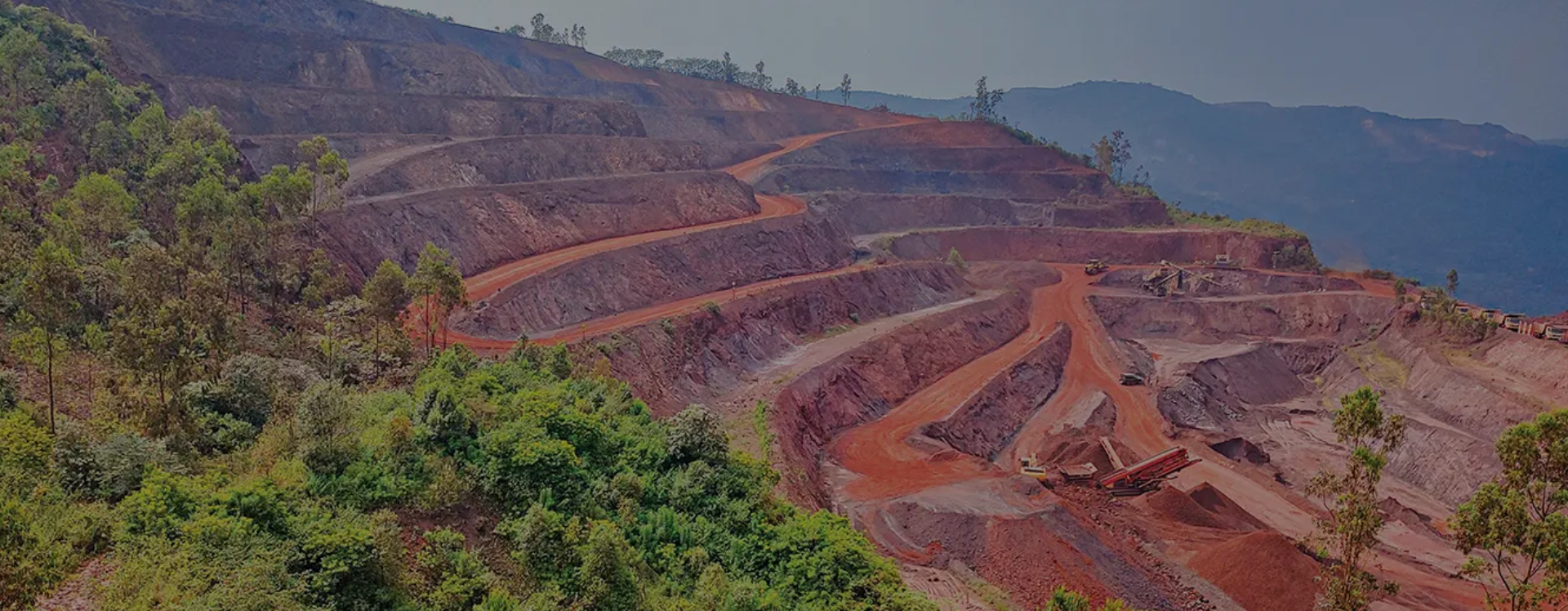
Our approach integrates environmental stewardship, progressive rehabilitation, stakeholder engagement, and responsible closure planning across the mining lifecycle.
At JSW Steel, we seek to create shared value and contribute to sustainable community development in the regions where we operate.
We have an approach of ensuring that local communities are not deprived of any resources or capital once a mine is closed. As part of this approach, we conduct social baseline studies to understand the social, economic, and environmental impacts of our mining operations on local communities. We engage with stakeholders throughout the closure process to ensure that their concerns are addressed.
The result of the assessment is utilized to develop closure-related mitigation plans that outline the steps that will be taken to address any potential risks or impacts associated with mine closure. This helps to mitigate the negative impacts of closure and to ensure that local communities can continue to thrive.
The local communities are provided training to enhance skills and create job opportunities. This includes vocational training, skills training and programs as a part of our targeted CSR strategy to build a skilled workforce that can thrive beyond the lifespan of the mine, ensuring that the local community as a whole develops towards a sustainable and self-sufficient community. Additionally, we collaborate with economic diversification programs to support sustainable economic growth and resilience in the communities where we operate during the mine operations as well as post closure. These programs focus upon the development of alternative industries, such as agriculture and small businesses through the local communities. This shall facilitate communities to be more resilient and adaptable to changes, ensuring long-term prosperity and stability. These efforts are integral to our commitment to responsible mining and community development.
We plan for mine closure from the very beginning of a mining project. We work with all stakeholders, including local communities, governments, and environmental groups, to develop a comprehensive progressive mine closure plan. This plan includes a timeline for closure, a budget for reclamation, and a description of the steps that will be taken to restore the land. To ensure these plans remain current and effective, we regularly assess them with input from local stakeholders, allowing for adaptation to new developments in operations, suggested as per EIA review in line with the regulations. Any developments in expansion of the mines, change in permits shall be assessed with local stakeholders in line with our regulatory procedures. This collaborative process promotes transparency and incorporates a variety of perspectives.
Additionally, we collaborate with economic diversification programs to support sustainable economic growth and resilience in the communities where we operate during the mine operations as well as post closure. These programs focus upon the development of alternative industries, such as agriculture and small businesses through the local communities. This shall facilitate communities to be more resilient and adaptable to changes, ensuring long-term prosperity and stability. These efforts are integral to our commitment to responsible mining and community development.
We have an approach of ensuring that local communities are not deprived of any resources or capital once a mine is closed. As part of this approach, we conduct social baseline studies to understand the social, economic, and environmental impacts of our mining operations on local communities. We engage with stakeholders throughout the closure process to ensure that their concerns are addressed. Social impact assessments are conducted during the run-up to closure to understand the potential impacts of our closure plan on the local communities.
Utilising these, robust social closure plans are developed which are part of our mine closure plans. Final closure activities include targets against KPIs such as Green belt development, afforestation of post-mined landscape, backfilling of mined-out voids, rehabilitation of post mining land, socio-economic developments, etc. based on the assessments conducted during the Mining plan development. These are created in partnership and consideration with local stakeholders in line with the standards prescribed by the Indian Bureau of Mines (IBM). The targets shall be consistently monitored and reviewed by the senior management, to ensure streamlined closure of the mines. These targets vary based on the mine closure plan, however, we did not require such targets to be developed for any of our mines.
We conduct concurrent reclamation during operations to minimize long-term closure liabilities. This means that we are rehabilitating the mine as it is being mined. This helps to minimize long-term closure liabilities and can also improve the social and environmental impacts of mining. Additionally, we annually evaluate the long-term reclamation and closure responsibilities to identify potential areas for improvement in the plans. This proactive approach supports the sustainable and environmentally responsible use of the land post-mining.
The plans are regularly reviewed to ensure that the scope of work is comprehensive and up-to-date, as new technologies and regulations may be developed over time that could impact the closure process and also helps to ensure that the cost estimates for mine closure process are accurate.
In the event of divestment, we ensure that a formal agreement is in place with the purchaser which fulfills a minimum set of mine closure requirements and are protected from future liability. We make financial provisions for divestments, subject to our internal controls and assurance, which support delivery of closure and post-closure commitments. The agreement ensures that the mine is closed in a responsible manner and that the environment is protected.
Our approach to Tailings Management covers our own operations and our business partners, and it ensures that we minimize impacts and risks through responsible site selection, design, and construction. We have a commitment to ensure that we minimize impacts and risks through responsible site selection, design, and construction; and adheres to the best practices of TSF management. We are committed to implementing international best practices in tailings management in line with the requirements of leading international standards such as ICMM, to ensure the safety of employees, communities, and the environment across the value chain. We also ensure avoidance of riverine/submarine tailings disposals in all projects.
Our current tailings management area is situated on the eastern boundary of the Vijayanagar plant and has a low-level risk potential. We develop our tailings storage facility plans while considering the life-of mines from which we extract our raw materials and the plans are in place for the lifetime of the Tailings facility. This includes details upon the tailings storage plans, implementation of surveilance and monitoring system, EPRPs, procedures for decommissioning and closure as per applicable regulations, Independent audit and assessments such as EIA and various geophysical, hydrogeological, and TCLP tests by third parties, and that we did not have any TSF failure in the last four fiscal years reporting period.
Lined tailings pond system with efficient water recycling.
Built on an impervious rock base after rigorous environmental assessments.
Designed for a 30-year lifecycle, aligned with global ICMM standards.
No tailings storage failures reported in the past four years.
The TMA features a well-maintained, lined tailings pond system that receives tailings in slurry form from our ore beneficiation plant. These tailings, primarily composed of low-grade iron ore, are stored securely, while excess water (supernatant) is efficiently recycled back to the beneficiation process—ensuring minimal water wastage.
Constructed on a geosyncline with a hard, impervious rock base, the site has undergone rigorous geophysical, hydrogeological, and environmental assessments, including TCLP testing and a comprehensive Environmental Impact Assessment (EIA) by reputed agencies such as MECON and Richardson & Cruddas.
Pond 1 is currently undergoing dredging operations. The extracted tailings paste is sent to the Slime Recovery Plant (SRP), where iron-bearing material with >45% Fe content is recovered. This high-grade material is then forwarded to the Pellet Plant for palletization.
The residual tailings from the SRP, containing <45% Fe, are transferred to Pond 2 for secure storage. This ensures efficient segregation and management of low-grade material.
Pond 3 receives fresh tailings directly from the ore beneficiation plant. These tailings are thickened for paste transportation, and dewatering is carried out to enhance the stability of the bunds, ensuring structural integrity and environmental safety.
Our tailings management strategy is aligned with international frameworks such as the International Council on Mining and Metals (ICMM) standards. We strictly avoid riverine and submarine tailings disposal methods across all projects. Each Tailings Storage Facility (TSF) is designed with a life-of-mine perspective—our current facility is equipped to manage tailings for the next 30 years. We have implemented a robust surveillance and monitoring system that spans the entire TSF lifecycle—from design and construction to closure.
We maintain a comprehensive Emergency Preparedness and Response Plan (EPRP), developed in accordance with local regulations and international best practices. Our commitment to transparency includes the reporting of any TSF-related incidents, such as containment loss, overspill, or structural breaches. All bunds are constructed using pre-engineered designs and High-Density Polyethylene (HDPE) liners to prevent seepage and ensure long-term structural integrity. We are proud to report that there have been no TSF failures in the past four fiscal years.
At JSW, we are committed to sustainable mining practices that prioritize environmental protection and long-term ecological balance. A key aspect of our environmental strategy is the proactive identification and management of Acid Rock Drainage (ARD) risks. The ARD management plans shall form part of our mine closures, and mining activities can only proceed if the plan determines that the ARD can be managed from both the technical and economic perspective. The plan shall consider the characterization, flow assessment, and determine the potential operation of treatment facilities, process designs and operational management systems which need to be integrated
In alignment with Environmental Impact Assessment (EIA) regulations, we assess the potential for ARD during the exploration phase of all our mining projects. Based on these assessments, a comprehensive mining plan is developed to ensure that any potential environmental impacts are addressed early in the project lifecycle.
If acid-generating rock is identified, a detailed ARD Management Plan is formulated during the feasibility phase. This plan spans the entire lifecycle of the mine—from the commencement of operations through to closure – and ensures that ARD risks are managed effectively from both a technical and economic standpoint.
Our ARD Management Plans include:
We also adopt industry best practices such as:
Employing alternative mining methods to minimize exposure of sulfide-bearing rock
Capping waste rock piles with impermeable layers to prevent water infiltration
Installing drainage and treatment systems to manage ARD
Reclaiming disturbed or abandoned sites to prevent future ARD formation
All JSW mining operations are fully compliant with applicable local environmental regulations. Our site-specific assessments have confirmed that none of our mining locations currently contain materials that are acid-generating or metal-leaching. This ensures that our operations remain environmentally sound and aligned with our commitment to responsible resource development.

Stories
Social Media


© 2026 JSW Steel. All rights reserved
Privacy Policy